

- by The Aluxury® Team
Vanilla Essential Oil: Benefits & Uses
- by The Aluxury® Team
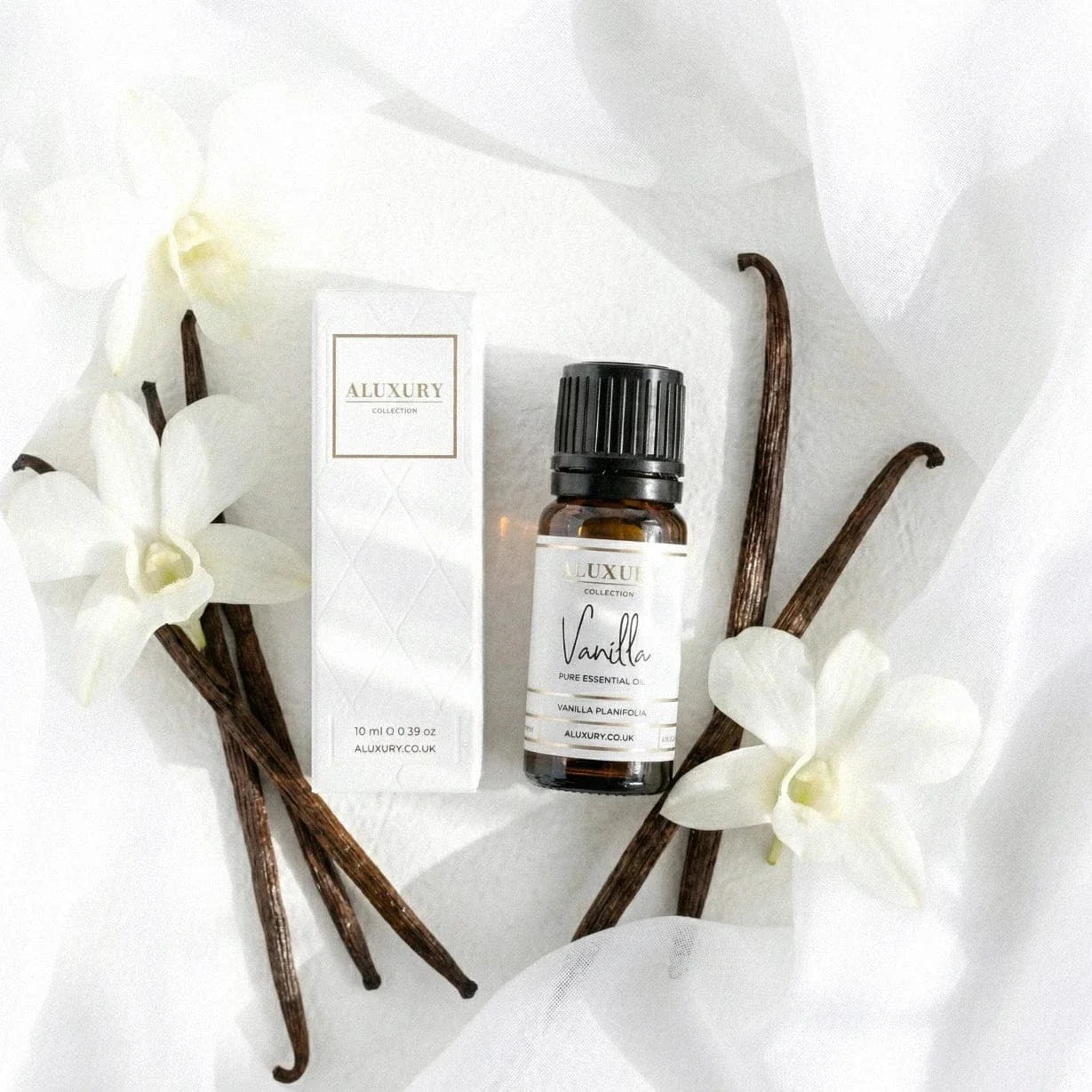
Few aromas feel as instantly reassuring as vanilla. Warm, sweet and softly resinous, vanilla essential oil is prized for its comforting, mood-lifting scent and its gentle, skin-friendly character. Derived from the cured pods of the vanilla orchid, it brings depth and warmth to blends, supports a calmer evening atmosphere when diffused, and contributes antioxidant compounds when used on the skin. Here we cover the genuine benefits, practical uses and an honest look at the different ways vanilla oil is made.
Vanilla has been valued for centuries, and while it is easy to over-promise with any aromatic, the most credible benefits are sensory and skin-related rather than medicinal. Here is a measured look at what vanilla can genuinely offer.
It is worth being honest here: claims that vanilla cures anxiety, fights infection or replaces medical care are not supported by robust evidence. What vanilla does reliably well is comfort, scent and a pleasing antioxidant profile in cosmetic formulations.

Vanilla is wonderfully versatile and rewards a little experimentation. As with all of our pure essential oils, you need very little, so begin sparingly and build up.
For a simple, indulgent body oil, blend a few drops of vanilla with sandalwood into 30ml of jojoba. For atmosphere, try vanilla with a citrus note such as bergamot to lift its sweetness, or with a soft floral like rose for an elegant, feminine accord.
Vanilla aromatics are not all made the same way, and the difference is worth understanding. Much of vanilla's scent comes from vanillin, a heavy compound that gives a low yield when distilled, so a great deal of the "vanilla essential oil" sold is in fact a solvent-extracted absolute or a CO2 extract rather than a true distilled oil:
Our vanilla oil is a genuine steam-distilled Vanilla planifolia essential oil, and we make it using the whole pod, with nothing wasted. That whole-pod method is the secret to its character: alongside the vanillin, the oil keeps the pod's own natural waxes and aromatic compounds, which give it real body, depth and a natural staying power that a thin, stripped distillate would lack. It is 100% pure, with no additives or fillers, and because we GC-MS test every batch we can show exactly what is inside. Recent analysis found vanillin, the natural compound behind vanilla's warm, sweet signature, as the dominant constituent at around 44%.
Used sensibly and well diluted, vanilla is considered one of the gentler aromatics. Like most essential oils it can cause skin irritation if applied undiluted, so a few simple precautions keep it safe and enjoyable.
All concentrated vanilla aromatics, including a steam-distilled oil, are potent, so the same care applies. Quality matters too: because we GC-MS test our vanilla, you can be confident of exactly what you are applying to your skin.
For a warm, comforting evening blend, add 3 drops of vanilla, 2 drops of sandalwood and 1 drop of bergamot to your diffuser. Begin with fewer drops and build up to suit your room.
Yes. Vanilla essential oil is real and entirely natural. Most vanilla aromatics on the market are solvent-extracted absolutes or CO2 extracts, but vanilla can also be genuinely steam-distilled, which is how ours is made. All are natural vanilla aromatics; the difference lies in the extraction method and the character of the scent.
No, it should always be diluted in a carrier oil first. A concentration of around 1% is suitable for the face and up to 2% for the body. Carrying out a patch test before first use is a sensible precaution.
Vanilla is a warm base note that complements a huge range of scents. It is especially lovely with sandalwood, jasmine and oud, and also works beautifully alongside citrus oils such as bergamot, or florals such as rose, which lift and brighten its natural sweetness.
Many people find the warm, sweet scent of vanilla comforting and relaxing, which can help create a calm atmosphere conducive to winding down in the evening. While it is not a treatment for sleep disorders, diffusing it before bed can contribute to a restful, settled environment.
Keep it tightly sealed in its original bottle, away from direct sunlight and heat, ideally in a cool, dark place. Stored well, it will keep its rich aroma for a long time, as vanilla's base-note character makes it more stable than many lighter oils.
Are Essential Oils Safe for Pets? Cats & Dogs
Read moreabout Are Essential Oils Safe for Pets? Cats & Dogs
Can You Use Any Oil in a Waterless Diffuser? A UK Guide
Read moreabout Can You Use Any Oil in a Waterless Diffuser? A UK Guide
Saffron in Aromatherapy: Benefits & Uses
Share: