


- by The Aluxury® Team
Are Essential Oils Safe for Pets? Cats & Dogs
- by The Aluxury® Team
Essential oils have become a much-loved part of many British homes, bringing natural fragrance and a sense of calm to everyday life. But if you share your home with a cat, dog or other animal, it is wise to pause before you diffuse. Pets experience scent and process compounds very differently to us, and some oils that are perfectly pleasant for people can pose a genuine risk to animals. This guide explains, responsibly and clearly, what every pet owner should know about using essential oils safely at home.
Before we begin, an important note: this article is for general information only and is not a substitute for professional advice. If you are ever unsure, please speak to your vet. We are passionate about essential oil safety for the whole household, animals included.
Animals are not simply small humans. Their bodies metabolise substances differently, their sense of smell is far more acute, and their smaller size means that even modest amounts can have a greater effect.
Cats are especially vulnerable. They lack a liver enzyme called glucuronyl transferase, which is needed to break down and safely clear certain compounds, particularly phenols, found in many essential oils. Because cats cannot metabolise these compounds efficiently, the substances can accumulate and cause harm. Cats also groom constantly, so any oil that settles on their coat is likely to be licked and ingested.
Dogs are generally a little more robust than cats, but they are by no means immune. Many oils remain toxic to dogs, and their powerful sense of smell means strong aromas can be overwhelming or distressing even at concentrations we would consider mild.
Birds deserve particular caution. Their respiratory systems are extraordinarily sensitive, and airborne particles or vapours that we barely notice can cause serious breathing difficulties. As a general rule, it is safest to avoid diffusing essential oils entirely in any home with pet birds.
The following essential oils are commonly flagged by veterinary sources as potentially toxic to cats and/or dogs. This list is not exhaustive, but it covers the oils most frequently associated with problems:
Because sensitivities vary between individual animals and species, the absence of an oil from this list does not automatically make it safe. The most responsible approach is to assume caution with all essential oils around pets and to check with your vet before introducing any new oil into your home.
This is the question we are asked most often, and the honest answer is: it depends, and care is essential. Diffusing oils into the air is very different from applying them directly, but it still introduces aroma compounds into a space your pet shares with you.
If you do choose to diffuse, do so sparingly and always in a well-ventilated room. Crucially, give your pet a clear way to leave the room. Never diffuse in an enclosed space where an animal is shut in and cannot move away from the scent. Animals are very good at self-regulating when given the choice, so the freedom to walk away is one of the most important safeguards you can offer.
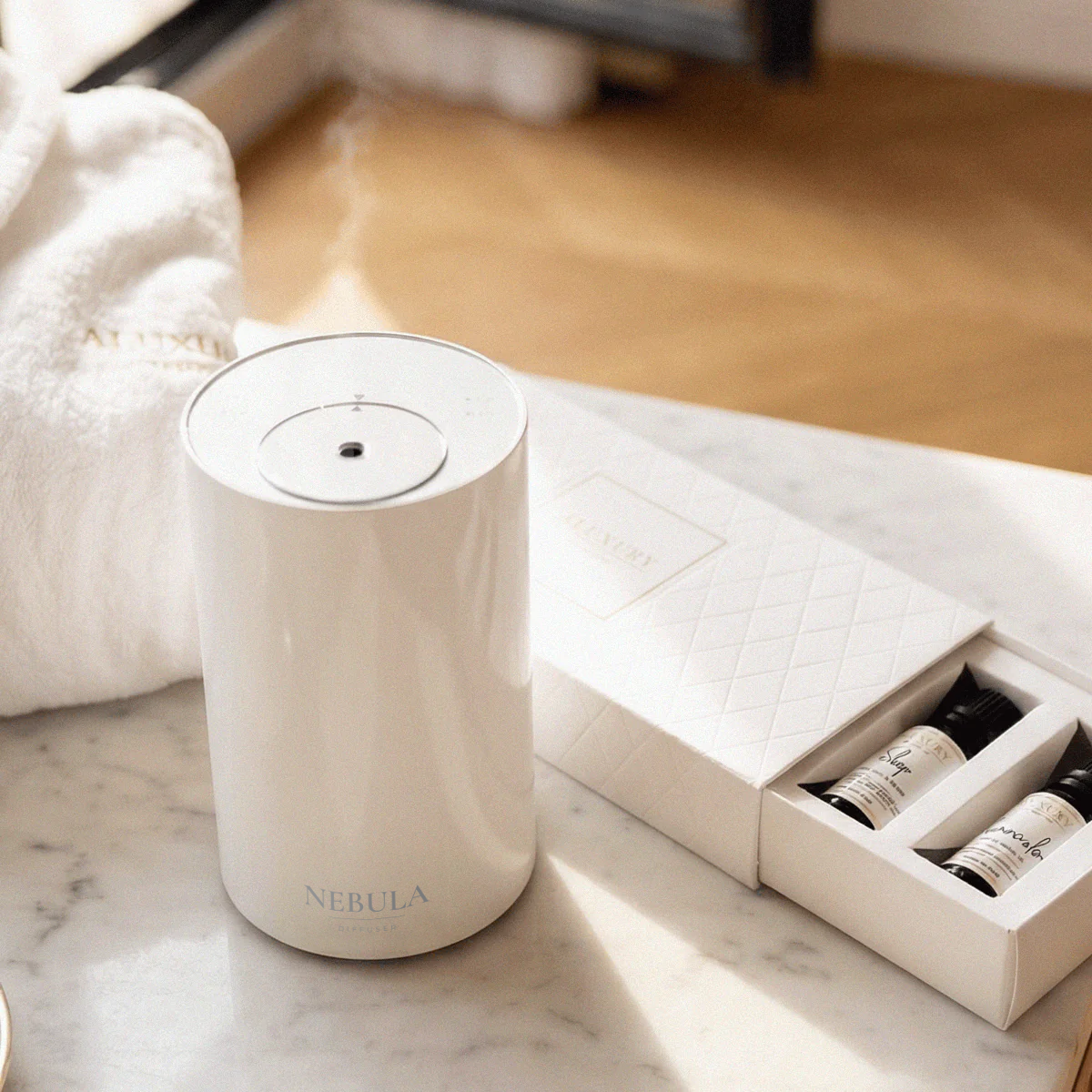
A controlled waterless diffuser, placed well away from your pet and run for short periods on a low setting, is a lower-risk approach than heavy, continuous diffusing or methods that fill a room with dense vapour. Using a small amount of oil, in a large airy space, with the door open, keeps concentrations gentle. Watch your pet closely the first few times and stop immediately if you notice any change in their behaviour.
A few simple habits make a real difference when you love both your animals and your aromas:
If you suspect your pet has been exposed to essential oils (whether by ingestion, skin contact or inhalation), act calmly and promptly. Watch for warning signs such as drooling, vomiting, lethargy, tremors or difficulty breathing. Other signs can include unsteadiness, pawing at the mouth or face, redness of the skin, or sudden changes in behaviour.
Take these steps:
Try to note which oil was involved and roughly how much, as this information will help the professionals advise you. Where your pet's health is concerned, it is always better to ask sooner rather than later.
Some oils are riskier than others, and several are toxic to dogs. If you choose to diffuse around dogs, do so sparingly in a well-ventilated room, give your dog the freedom to leave, and never apply oils to their skin or let them ingest any. When in doubt, check with your vet first.
Cats are particularly sensitive because they lack a liver enzyme needed to process certain compounds, such as phenols. Many oils (including tea tree, citrus, peppermint and eucalyptus) are best avoided around cats. Diffuse only with great care, ventilation and an escape route, and speak to your vet before introducing oils.
Oils frequently flagged as toxic to cats and/or dogs include tea tree, eucalyptus, peppermint, citrus oils (lemon, orange, lime, bergamot), ylang ylang, cinnamon, clove, pine, wintergreen and pennyroyal. This list is not exhaustive, so caution with all oils is wise.
No. You should never apply essential oils directly to a pet's skin or fur, and never allow them to ingest oils. Grooming can turn topical oil into ingested oil very quickly, which is why this is so important.
Remove your pet from the source, ventilate the room, and watch for drooling, vomiting, lethargy, tremors or difficulty breathing. Contact your vet immediately, or in the UK call the Animal PoisonLine on 01202 509000. It is always best to seek advice promptly.
Are Essential Oils Safe for Pets? Cats & Dogs
Read moreabout Are Essential Oils Safe for Pets? Cats & Dogs
Can You Use Any Oil in a Waterless Diffuser? A UK Guide
Read moreabout Can You Use Any Oil in a Waterless Diffuser? A UK Guide
Saffron in Aromatherapy: Benefits & Uses

Share: