

- by The Aluxury® Team
Saffron in Aromatherapy: Benefits & Uses
- by The Aluxury® Team
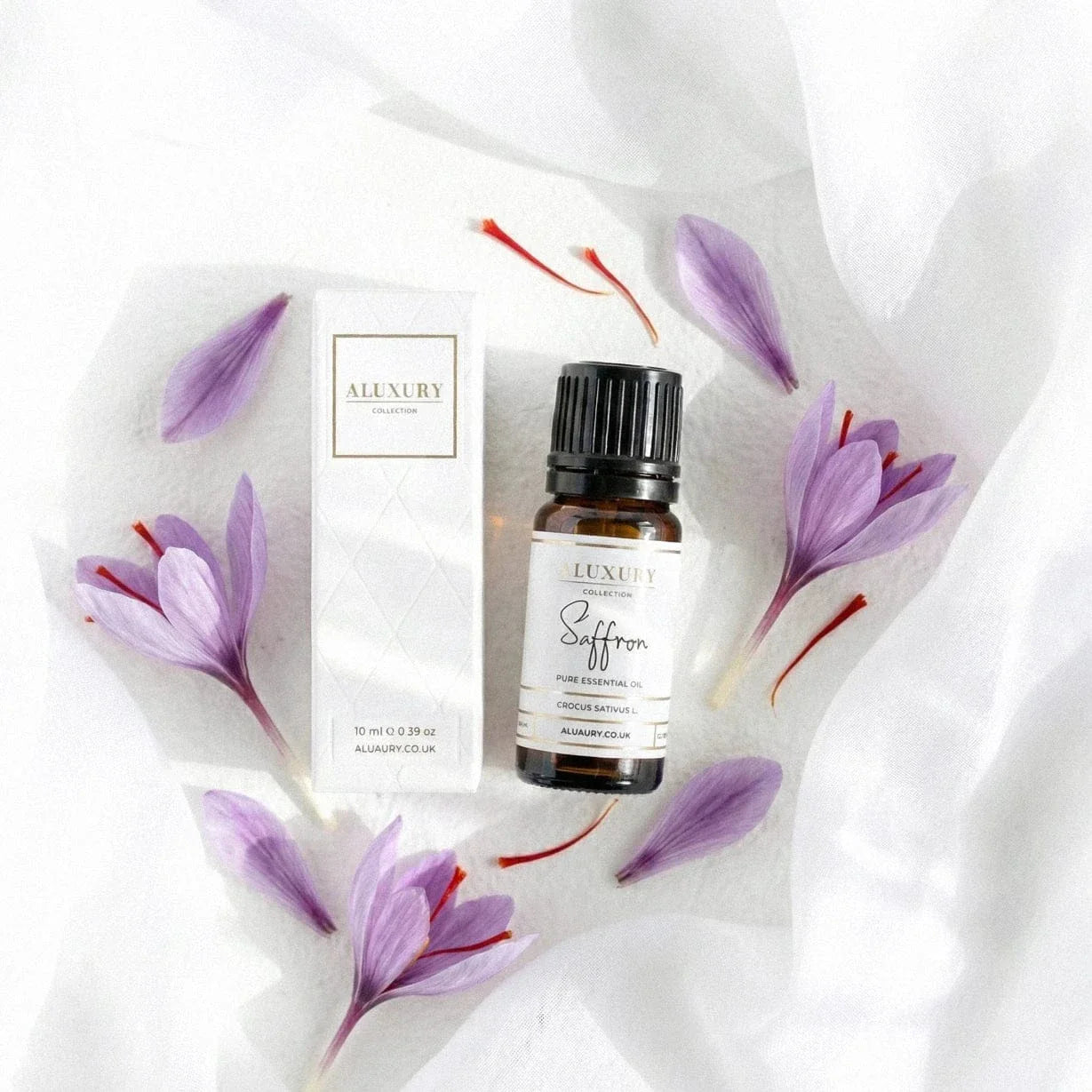
Few ingredients carry the mystique of saffron. Prised from the heart of a delicate autumn crocus and worth more by weight than gold, it has perfumed rituals, kitchens and apothecaries for thousands of years. In aromatherapy, saffron is a rare and treasured note, valued for its warm, honeyed depth and its long association with comfort and good spirits. Here we look at what makes saffron essential oil so special, how it is used, and what the evidence does (and does not yet) tell us.
Saffron is, quite simply, the world's most expensive spice. Its extraordinary value comes down to how it is made. Each saffron crocus flower produces just three slender crimson stigmas, and every one must be picked by hand during a short autumn window, often at dawn before the blooms open fully. It takes roughly 150,000 flowers (and an enormous amount of careful labour) to yield a single kilogram of dried saffron threads.
From those precious threads comes saffron oil, an aromatic treasure in its own right. The scent is unmistakable: warm, sweet and faintly leathery, with a honeyed, hay-like richness that feels both ancient and luxurious. You need only the smallest amount to feel its presence, which is part of saffron's enduring appeal. This is an oil to be used thoughtfully and savoured, much as the spice itself has always been.

For centuries, saffron has been linked with brightness of mood and a sense of wellbeing. Traditional practices across Persia, India and the Mediterranean prized it as an uplifting, heart-warming ingredient, and that reputation carries through into how it is used in aromatherapy today.
The most commonly described qualities of saffron in aromatherapy include:
It is worth being honest here: scientific research into saffron is genuinely promising, with a growing body of work exploring its compounds and how they may relate to mood. However, much of this research focuses on saffron taken as a supplement rather than inhaled as an aroma, and the aromatherapy evidence specifically is still emerging. We would encourage you to enjoy saffron oil for the comfort and pleasure it brings, rather than as a treatment for any medical condition. If you are managing your wellbeing or mental health, please speak with a qualified healthcare professional.
Saffron is a precious oil, so the good news is that you need very little to enjoy it. There are two main ways to bring it into your routine.
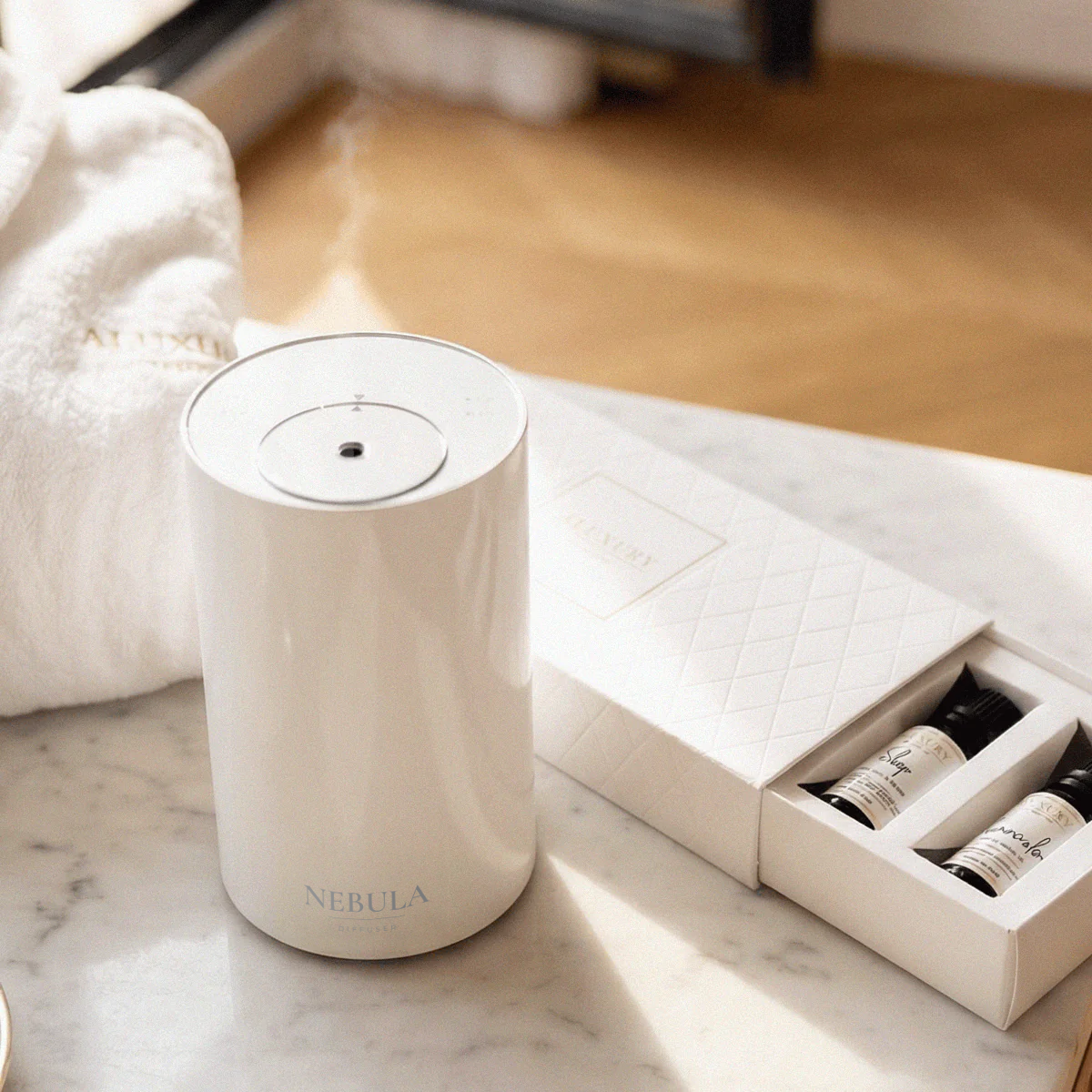
Diffusing. Adding a drop or two to an aromatherapy diffuser fills a room with saffron's distinctive warmth. Because the aroma is so concentrated and rich, start with a single drop and build from there. You can always add more, but saffron rewards restraint. It is wonderful in the evening, when its cosseting, golden character helps to create a calm and welcoming space.
Blending. Saffron truly shines alongside other luxurious, deep aromas. It has a natural affinity with warm and resinous notes, and pairs beautifully with:
If you are blending these in a waterless diffuser, sandalwood, oud and vanilla are all naturally thicker oils. Pre-dilute them with our Natural Oil Diluent, a fragrance-free triacetin diluent designed specifically for waterless systems, to keep the atomiser running cleanly. In a water-based ultrasonic diffuser no extra dilution is needed.
When blending, always dilute saffron in a suitable carrier oil, such as jojoba or sweet almond, before applying it to the skin. As with all of our pure essential oils, quality and purity make all the difference to the final result. Saffron's complexity gives a depth to bespoke blends that few other ingredients can match.
Used sensibly, saffron oil can be enjoyed as part of a considered aromatherapy routine. As with any concentrated essential oil, a few simple precautions are important.
Every bottle we supply is 100% pure and GC-MS tested, so you can trust exactly what you are putting into your diffuser or blend. When you work with an oil this rare, that certainty matters.
For a rich, golden blend, add 1 drop of saffron, 2 drops of sandalwood and 1 drop of vanilla to your diffuser. Saffron is potent, so begin with a single drop. If you are using a waterless diffuser, pre-dilute the sandalwood and vanilla with a few drops of our Natural Oil Diluent first, as these are thicker oils that can otherwise build up in the atomiser.
Saffron has a warm, sweet and honeyed aroma with a distinctive hay-like, faintly leathery depth. It is rich and complex rather than light or fresh, which makes it a luxurious base note in sophisticated blends.
Saffron is the world's most expensive spice, harvested entirely by hand from the stigmas of the saffron crocus, so genuine saffron oil is a premium ingredient. The reassurance is that you only need a drop or two at a time, so a single bottle lasts a remarkably long time.
Saffron pairs beautifully with other warm, deep and resinous aromas. Sandalwood, rose and oud are all natural companions, helping you create rich, opulent blends. Start with saffron as a small accent and adjust to taste.
No. Saffron oil should always be diluted in a carrier oil, such as jojoba or sweet almond, before applying it to the skin, typically at around a 1–2% dilution. Carry out a patch test first and discontinue use if any irritation occurs.
Research into saffron is encouraging and ongoing, but much of it relates to saffron as a supplement rather than as an inhaled aroma, and aromatherapy evidence is still emerging. We recommend enjoying saffron oil for the comfort and pleasure of its scent, and speaking to a healthcare professional about any health concerns.
Are Essential Oils Safe for Pets? Cats & Dogs
Read moreabout Are Essential Oils Safe for Pets? Cats & Dogs
Can You Use Any Oil in a Waterless Diffuser? A UK Guide
Read moreabout Can You Use Any Oil in a Waterless Diffuser? A UK Guide
Saffron in Aromatherapy: Benefits & Uses
Share: