

- by The Aluxury® Team
Can You Use Any Oil in a Waterless Diffuser? A UK Guide
- by The Aluxury® Team
Short answer: the single factor that decides is thickness. Free-flowing oils atomise cleanly, that covers most pure essential oils and most diffuser oils. A small group of naturally thick essential oils (sandalwood, vanilla, patchouli, chamomile, vetiver, myrrh and oud) work too, but need pre-diluting with a triacetin diluent first. What will damage the device: any oil pre-mixed with a carrier oil (jojoba, coconut, almond), water-based or aqueous blends, perfume, alcohol, cooking or skincare oils. If you’re unsure about an oil, the test is simple: fill the diffuser and switch it on. If no mist appears, the oil is too thick, either pre-dilute it or use something thinner.
At Aluxury® this is one of the most common questions we get, especially from people coming to waterless diffusion from an ultrasonic or reed-diffuser background, where the oil rules are quite different. The category is growing quickly in the UK, and the appeal is obvious: pure, undiluted scent on demand, no water tank, no descaling. But because the device atomises neat oil through a fine nozzle, what you put in matters far more than with a water-based unit.

A waterless diffuser uses cold-air nebulising technology to atomise oil directly into the air. There is no water, no heating element and no dilution: the oil is drawn up through a fine nozzle and broken into a micro-fine vapour by pressurised air. This is what gives waterless diffusion its purity and strength, nothing waters the scent down, nothing heats the oil.
The trade-off is that the diffuser is genuinely fussy about what it atomises. With an ultrasonic diffuser you can drop in almost anything fragrant because the water does most of the carrying. A waterless diffuser has to move neat oil through a narrow nozzle, so:
For the full technical comparison, see our waterless vs water-based diffusers guide. For which specific essential oils work best for everyday scenting, see our best essential oils for a waterless diffuser.
The cleanest way to think about this is by category rather than by individual product. Here's the complete picture.
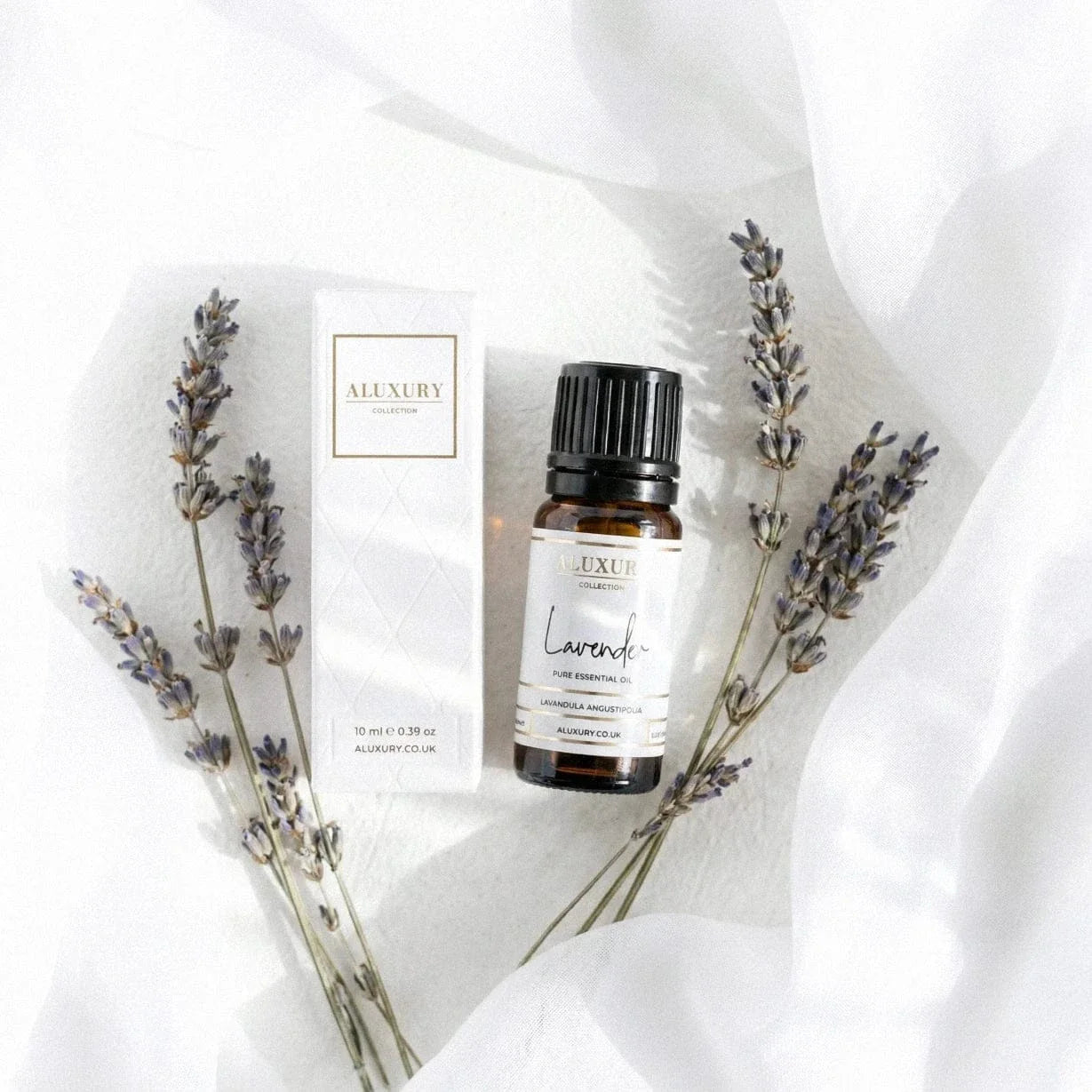
Steam-distilled or cold-pressed essential oils with no carrier oil, no water and no additives are exactly what a waterless diffuser is built for. The vast majority, citruses, light florals, herbs, leaves and lighter woods, atomise beautifully neat. Lavender, bergamot, sweet orange, eucalyptus, peppermint, lemongrass, cedarwood, frankincense and so on all run cleanly indefinitely.
The only essential oils that need extra thought are a small group of naturally thick, resinous ones, sandalwood, vanilla, patchouli, chamomile, vetiver, myrrh and oud, which we cover further down. Otherwise: pure essential oils = green light.
Shop our range of 100% pure essential oils. Every bottle is GC-MS tested and certificated, with no hidden carriers.
Most diffuser oils sold for home fragrance work in a waterless diffuser, but the same rule applies: the oil has to be thin enough to flow up the nozzle, and it must not be pre-mixed with a carrier oil, water or alcohol. You can’t always tell a thick blend from a thin one by the label, and viscosity varies between brands and even between scents in the same range. The practical test for any oil you’re unsure about is the one above, fill, switch on, and watch for mist. No mist means it’s too thick to use neat.
That applies to other brands too, not just ours. Most reputable diffuser-oil ranges are formulated for atomisation. The honest caveat is that you can't always tell a thick blend from a thin one until you try it. The practical test is simple: if you fill the diffuser and no mist appears, the oil is almost certainly too thick. Either pre-dilute it with our Natural Oil Diluent (see below) or switch to a thinner oil, nothing is damaged by a one-off test.
Our own luxurious diffuser oils are formulated specifically for waterless and electric diffusers, and none of them require dilution. For oils from other brands, the no-mist test is your safest check.
A small number of essential oils are naturally thick, resinous or waxy. They smell magnificent, many of the most-loved scents in aromatherapy belong here, but used neat in a waterless diffuser they atomise slowly and gradually leave residue on the atomiser. These are the oils we flag in our own range with a “needs diluent for waterless diffusers” notice on the product page:
| Oil | Why it’s thick | Recommended dilution |
|---|---|---|
| Sandalwood | High santalol content | 1:1 with diluent |
| Vanilla | Resinous oleoresin base | 1:2 with diluent |
| Patchouli | Heavy molecular weight | 1:1 with diluent |
| Chamomile | Waxy at cool room temperatures | 1:1 with diluent |
| Vetiver | One of the most viscous of all | 1:2–3 with diluent |
| Myrrh | Resinous gum-extract | 1:2–3 with diluent |
| Oud (Agarwood) | Extremely thick resin distillate | 1:2–3 with diluent |
The fix is straightforward: pre-dilute these oils with a triacetin diluent (covered in the next section). Diluted, they run as cleanly as any citrus, with no loss of scent character. You don't have to give up your favourite warm, deep evening oils to enjoy a waterless diffuser.
This is the category most commonly responsible for damaged waterless diffusers, and it's where Scandiscents and other UK retailers see most complaints. Don't use these in a waterless diffuser:
If you're not sure, the test is simple: a drop on white paper from a 100% pure essential oil evaporates without an oily residue ring. A diluted blend leaves a clear ring. The blend is fine on skin, just not in your diffuser.
A handful of other oil types people sometimes try, all best avoided:
The simple rule of thumb: if it isn't either a pure essential oil, a pure fragrance oil, or a diffuser-specific blend made by a reputable supplier, check before using.
For waterless diffusers, the correct way to use a thick oil (sandalwood, vanilla, patchouli, chamomile, vetiver, myrrh, oud) is to pre-dilute it with a fragrance-free, low-viscosity diluent. The right material for this is triacetin (glyceryl triacetate), a clear, water-thin, odourless liquid that is:

Our Natural Oil Diluent is exactly that, pure cosmetic-grade triacetin in a 20ml bottle, made to mix with thicker essential and fragrance oils before they go into a waterless diffuser. Mix small batches in a clean amber bottle, or add diluent drops directly to the diffuser's neck before adding the oil. The scent strength is preserved because triacetin has no aroma of its own, you're simply making the oil flowable.
Typical ratios: 1:1 oil to diluent for moderately thick oils (sandalwood, patchouli, chamomile); 1:2–3 for very thick oils (vetiver, myrrh, oud, vanilla, absolutes). Run a small test, you want the blended oil to flow as freely as a citrus. There's no upper limit, and over-diluting will not damage the device.
Shop the Aluxury® Natural Oil Diluent →
One of the genuine differences between a waterless and an ultrasonic diffuser is how mercilessly a waterless diffuser exposes oil quality. A poor or adulterated oil:
This is why we test every Aluxury® oil by GC-MS and supply a certificate of analysis on request: we want the same atomising consistency in every bottle, whether it’s a pure essential oil or a multi-note blend. The diffuser doesn’t know the difference between an essential oil and a fragrance blend, but it knows the difference between a clean one and a contaminated one.
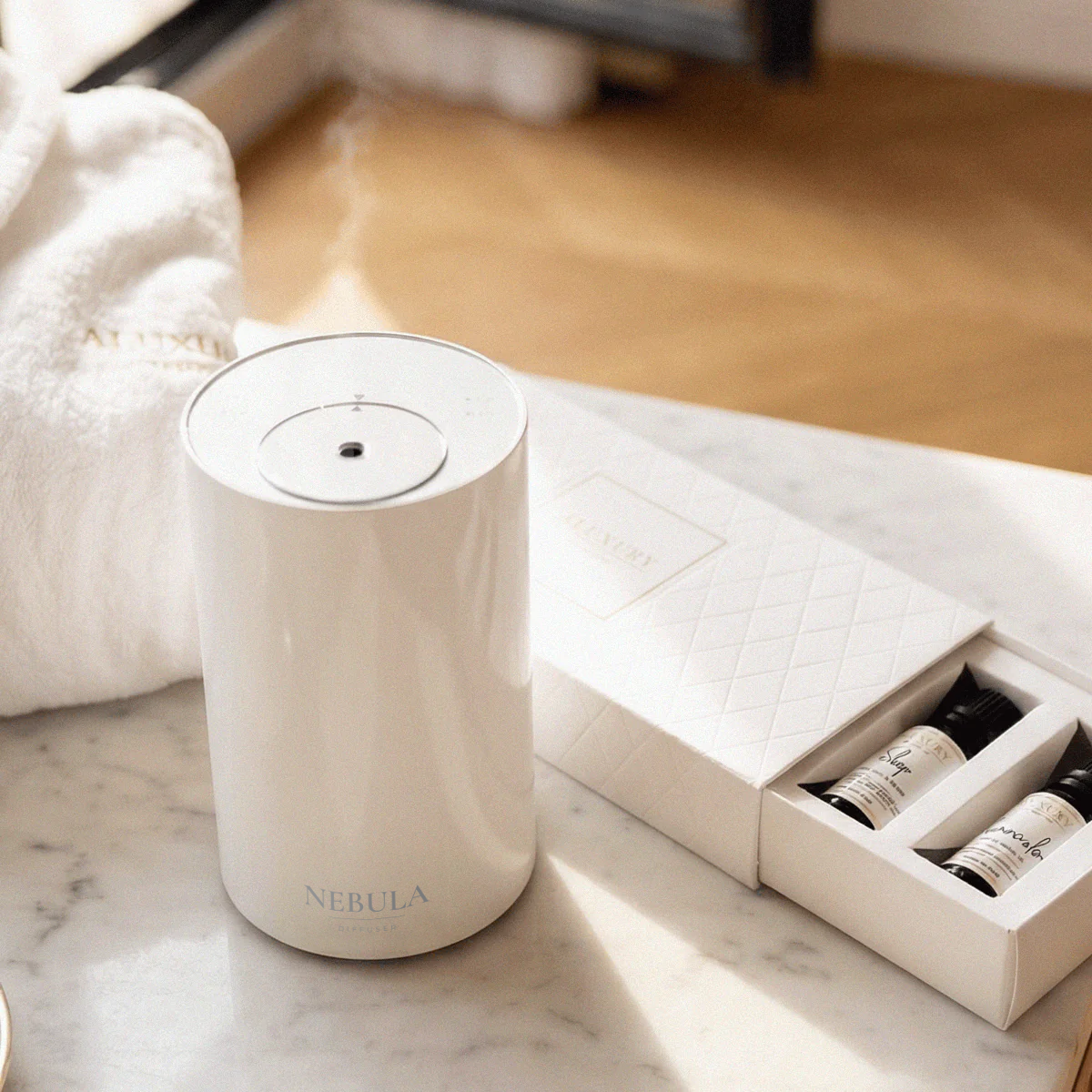
If you're shopping for a waterless diffuser, the specifications that matter most are: a true cold-air nebulising mechanism (no heating element), good battery life so you can move it room to room, granular intensity and timer control, and honest room-coverage figures. Our Aluxury® Nebula Waterless Diffuser hits all four, up to 120 hours of runtime per charge, 80m² coverage, six intensity levels and six timer modes, plus an anti-tip automatic shut-off that matters if you're using a freshly mixed dilution in a busy room.
For the full breakdown of what to look for, see our best waterless diffuser UK 2026 guide.
The simple rule: thin, neat oils work; thick oils need pre-diluting; oils pre-mixed with a carrier, water, alcohol or thickener will damage the device. If you’re unsure, fill the diffuser and look for a mist, nothing more complex than that. Stick to genuinely pure essential oils, diffuser oils made for atomisation, and the diluent for the naturally thick essentials, and the door is open to almost every aroma you might want to fill a room with.
Pick high-quality oils, pre-dilute the seven thick ones, avoid the four "no" categories above, and the door is open to almost every aroma you might want to fill a room with.
Shop Essential Oils → Shop Fragrance & Designer-Inspired Oils → Shop the Natural Oil Diluent →
Yes, generally. Diffuser-grade fragrance oils and multi-note diffuser oil blends from most reputable brands are formulated for atomisation and run cleanly. The simple practical test: if you fill the diffuser and no mist appears, the oil is most likely too thick, either pre-dilute with our Natural Oil Diluent or use a thinner oil. The only fragrance oils to actively avoid are candle-fragrance or skincare-fragrance bases, which often contain solvents and carriers unsuited to nebulising.
No. Personal perfumes and colognes are alcohol-based, which is flammable, can dry the seals, and is not safe near an electrically driven atomiser. They also contain fixatives and skin-conditioning ingredients designed for the body, not for atomisation. For a designer fragrance profile in a diffuser, choose a diffuser oil that has been formulated for atomisation, not a personal perfume.
No, and you should not use one. Vegetable carrier oils are designed for skin application and are far too thick to atomise, they will coat the atomiser within a few days. The same applies to any "ready-to-use" essential oil blend that has been pre-diluted with a carrier oil for roll-on or massage use. If an essential oil is too thick to nebulise neat, dilute it with a triacetin diluent such as our Natural Oil Diluent, which is purpose-made for waterless atomisation.
Only if the bottle specifically says it is also suitable for waterless or atomising diffusers. Reed-diffuser oils designed only for reeds use a slow-wicking base (often dipropylene glycol or similar) that is not formulated to atomise, and some bases contain ingredients that thicken under air pressure. The Aluxury luxurious diffuser oils range is built to work in both reed and waterless diffusers, but a reed-only product from elsewhere should not go into your atomiser.
No. A waterless diffuser is designed to atomise neat oil, not aqueous fluids. Water-based aroma blends (anything that lists water as an ingredient, or is marketed as "water-based scent") can corrode the chamber and rapidly damage the mechanism. These oils are intended for ultrasonic, plug-in or warmer-style diffusers instead.
These are absolutely fine to use, they just need a moment of preparation. Seven essential oils, sandalwood, vanilla, patchouli, chamomile, vetiver, myrrh and oud, are naturally thick and will leave residue on the atomiser if used neat over time. Pre-dilute them with our Natural Oil Diluent (typically 1:1 for sandalwood, patchouli or chamomile; 1:2 or 1:3 for vetiver, myrrh, oud and vanilla) and they run as cleanly as any citrus, with the scent fully preserved.
No. Cooking oils such as olive, vegetable or sesame are far too viscous. Food-grade flavouring oils (the lemon, peppermint or vanilla extracts sold for baking) often contain emulsifiers, sugars or propylene glycol that help them mix into recipes but build up quickly on an atomiser. Stick to aromatherapy-grade pure essential oils or diffuser-specific fragrance blends.
It depends what you put in. A single drop of the wrong oil won’t kill a diffuser. Sustained use of a carrier-oil blend, a water-based oil, a reed-only base or a cooking oil will: residue builds up on the atomiser, scent throw drops, and the mechanism eventually fails. With a quality diffuser like the Nebula, sticking to thin oils (most pure essential oils and most diffuser oils), and pre-diluting the naturally thick ones, will give you years of trouble-free use.
Three quick checks. First, the label: a pure oil declares 100% pure with no carrier listed. Second, the paper test: a drop of a pure essential oil evaporates from white paper without leaving an oily ring; a diluted oil leaves a visible residue. Third, the certificate: reputable suppliers will provide a GC-MS analysis on request, which tells you exactly what's in the bottle. Suspiciously cheap "essential oils" are almost always cut with a carrier.
For light pure essential oils and fragrance oils used everyday, a quick alcohol cycle every 2–3 weeks keeps the atomiser performing at its best. If you use thicker oils, even pre-diluted, run a short cleaning cycle weekly. Whenever you switch between very different scent families (citrus to oud, for example), clear the nozzle with a few drops of high-strength isopropyl alcohol on a fresh tube to keep aromas crisp.
Are Essential Oils Safe for Pets? Cats & Dogs
Read moreabout Are Essential Oils Safe for Pets? Cats & Dogs
Can You Use Any Oil in a Waterless Diffuser? A UK Guide
Read moreabout Can You Use Any Oil in a Waterless Diffuser? A UK Guide
Saffron in Aromatherapy: Benefits & Uses
Share: