

- by The Aluxury® Team
Jasmine Essential Oil: Benefits & Uses
- by The Aluxury® Team
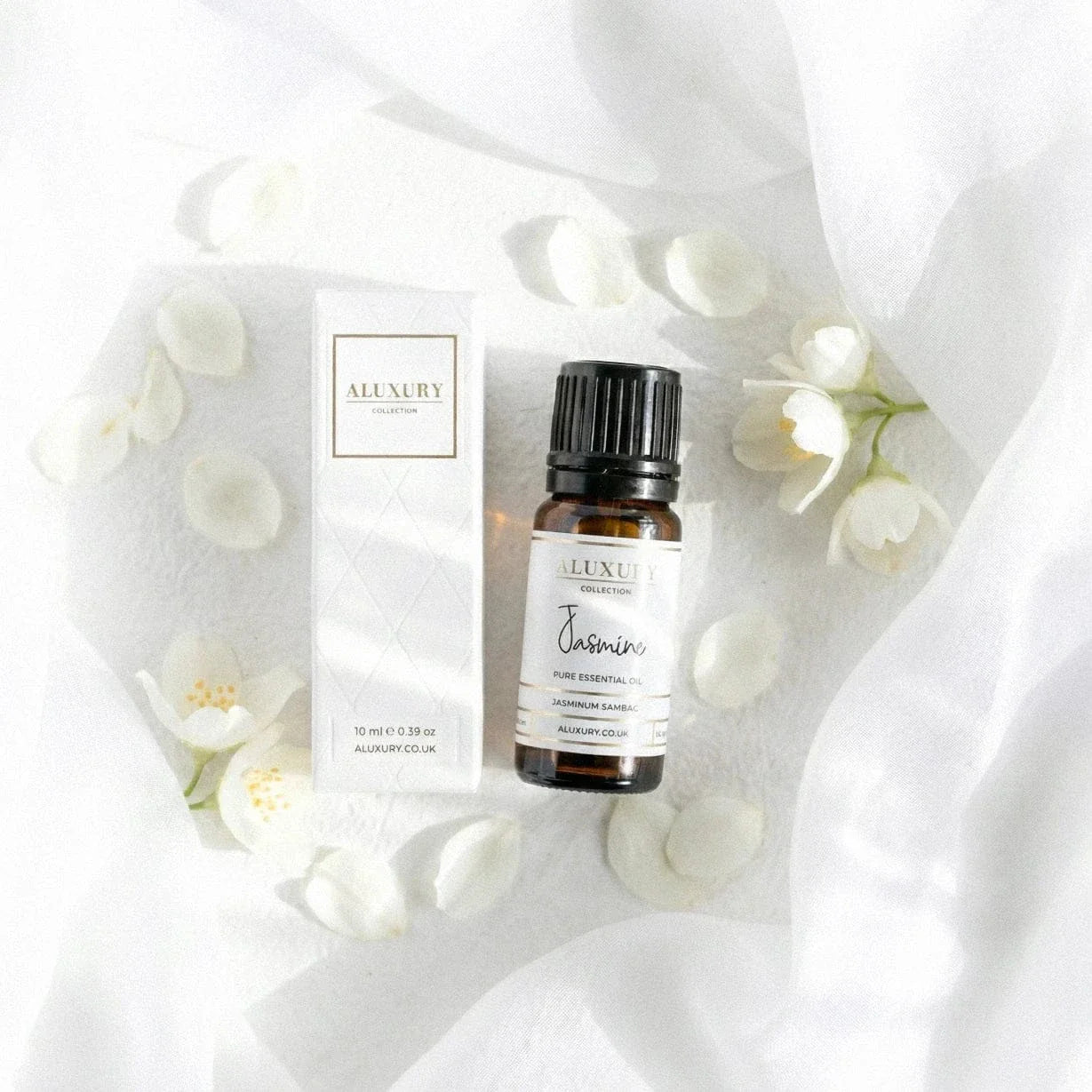
Few scents announce themselves quite like jasmine. Rich, honeyed and faintly heady, it has perfumed gardens and bottles of fine fragrance for centuries. Our jasmine essential oil captures that unmistakable character in a form you can diffuse, blend and wear at home. Below we explain what jasmine oil genuinely offers, how to use it well, and one important point of honesty about how it is actually made.
First, a quick note on terminology. A great deal of the jasmine sold elsewhere as essential oil is in fact a solvent-extracted absolute, because the flowers are delicate and low-yielding. Ours is different: a 100% pure, steam-distilled jasmine essential oil rather than an absolute, and GC-MS tested like all our oils. That distinction is worth knowing when you compare jasmine oils.
With that established, here is what jasmine is genuinely valued for:
We would always rather be measured than make grand promises. Jasmine is a wonderful aromatic and cosmetic ingredient; it is not a medicine.

A small amount produces a great deal. Jasmine is intense, so restraint is your friend.
Jasmine plays especially well with other rich, rounded aromas. It loves the creamy warmth of sandalwood, the sweet comfort of vanilla, and the classic pairing of rose for a deeply floral accord. For balance, a touch of bergamot or sweet orange lifts the blend and stops it feeling too dense. You will find all of these among our pure essential oils.
There are two jasmine species you will most often encounter, and they smell subtly different.
Neither is better; they are simply different expressions of the same beautiful flower. If you love a fresher, greener floral, sambac may win your heart. If you prefer the lush, opulent jasmine of grand perfumes, grandiflorum is your oil. Whichever you prefer, ours is steam-distilled and GC-MS tested for purity.
Used sensibly, jasmine is generally well tolerated, but a few precautions matter.
Every batch of our oil is GC-MS tested for purity and composition, so you always know exactly what you are putting on your skin and into your home.
For a soft, sensual floral blend, add 1 drop of jasmine, 2 drops of sandalwood and 1 drop of sweet orange to your diffuser. A single drop of jasmine is plenty, as its scent is intense.
Both exist. Much of the jasmine on the market is a solvent-extracted absolute, because the flowers are delicate. Ours, however, is a genuine steam-distilled essential oil rather than an absolute, and it is 100% pure and GC-MS tested, so when you buy our jasmine you are getting a true essential oil.
Warm, sweet and intensely floral, with a honeyed, almost fruity richness. Grandiflorum tends to be the more opulent and rounded, while sambac is brighter and greener. Both are deep and long-lasting, which is why a single drop is usually plenty.
Yes, provided you dilute it well, to around 0.5–1% in a carrier oil such as jojoba or sweet almond. Always patch test first, keep it away from the eyes, and never apply it neat.
Jasmine pairs beautifully with sandalwood, vanilla and rose for a rich, indulgent accord, and with bergamot or sweet orange for a lighter, lifted feel. Because jasmine is so dominant, use it sparingly within any blend.
It is generally advised to avoid jasmine during pregnancy, as it is traditionally linked with labour. If you are pregnant or breastfeeding, please speak to a qualified healthcare professional or aromatherapist before using it.
Are Essential Oils Safe for Pets? Cats & Dogs
Read moreabout Are Essential Oils Safe for Pets? Cats & Dogs
Can You Use Any Oil in a Waterless Diffuser? A UK Guide
Read moreabout Can You Use Any Oil in a Waterless Diffuser? A UK Guide
Saffron in Aromatherapy: Benefits & Uses
Share: