

- by The Aluxury® Team
Best Essential Oils for a Waterless Diffuser
- by The Aluxury® Team
The best essential oils for a waterless diffuser are light, free-flowing oils that atomise cleanly without clogging the nozzle. Top performers include lavender, bergamot, sweet orange, eucalyptus, peppermint and lemongrass, with frankincense and cedarwood adding warmth and depth. As a rule, the thinner and more fluid the oil, the better it will perform in a waterless system. Below we cover which oils to choose, which to use with care, and how to get the most from your diffuser.
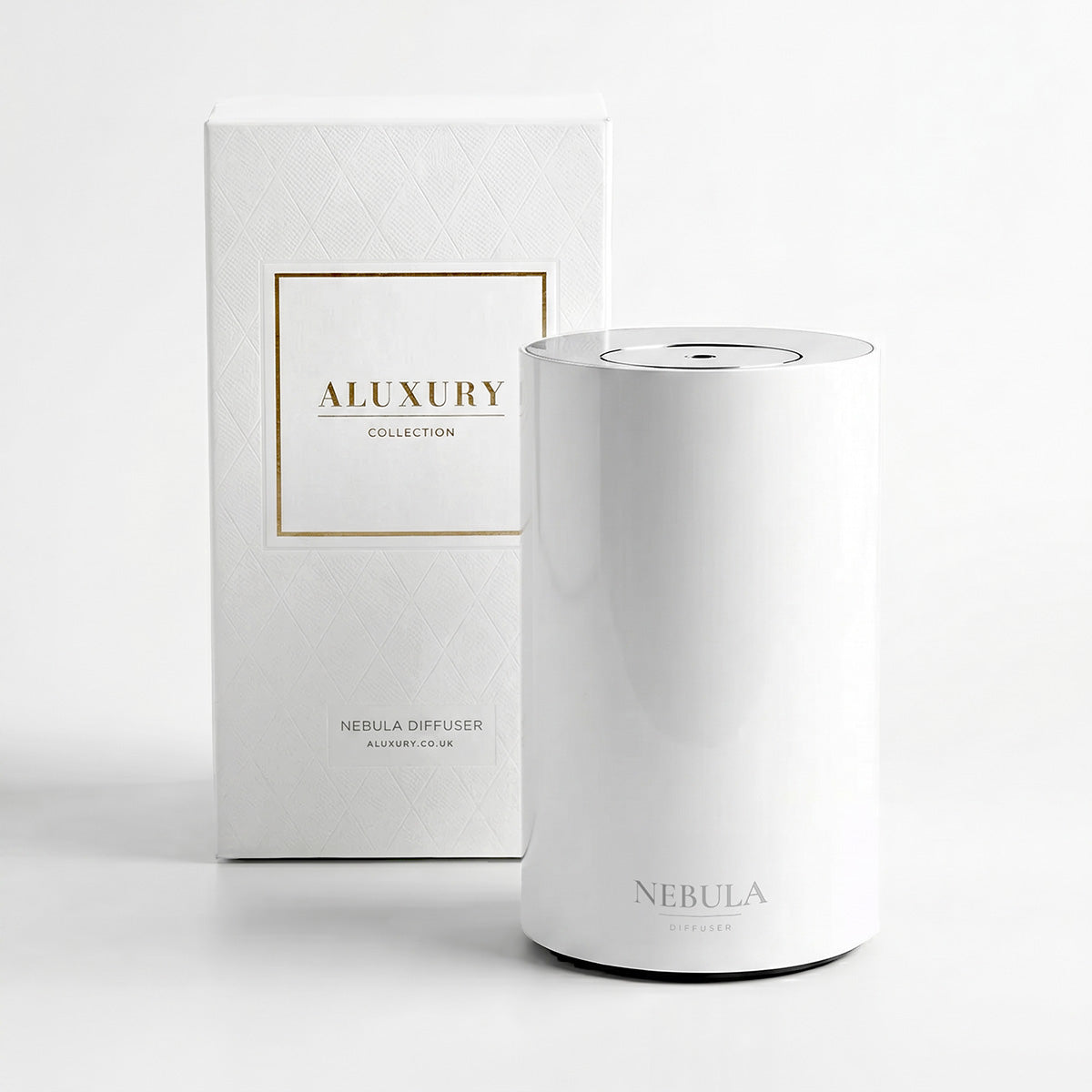
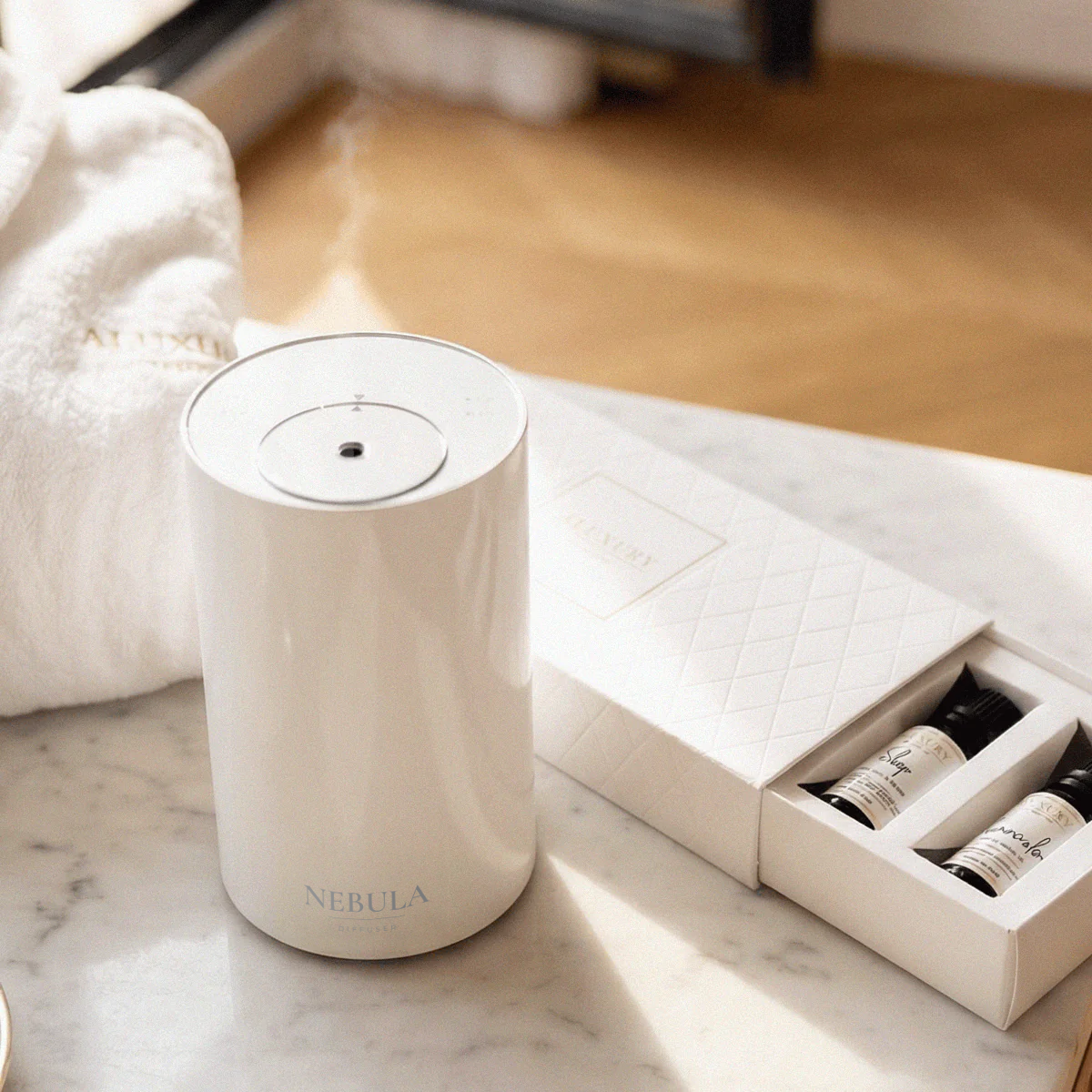
Waterless diffusers, such as the Nebula waterless diffuser, work very differently from ultrasonic models. Rather than dispersing oil through water as a fine mist, they use cold-air nebulising technology to break neat oil into a dry, micro-fine vapour. This delivers a purer, more potent scent and means the oil's natural viscosity matters a great deal.
Yes, you can use almost any essential oil in a waterless diffuser, but thickness matters. Because these diffusers atomise neat oil through a narrow nozzle, thin, free-flowing oils perform beautifully, while thick, resinous or sticky oils can be slow to move and may eventually clog the mechanism if used neat and undiluted.
The good news is that the great majority of popular oils (citruses, florals, herbs and most woods) are well within the ideal viscosity range. You only need to take a little extra care with a small handful of dense, resinous oils, which we cover further down. For everyday use, choosing genuinely pure essential oils rather than diluted or adulterated blends also helps, as added carrier oils and synthetic fillers can alter how cleanly an oil atomises.

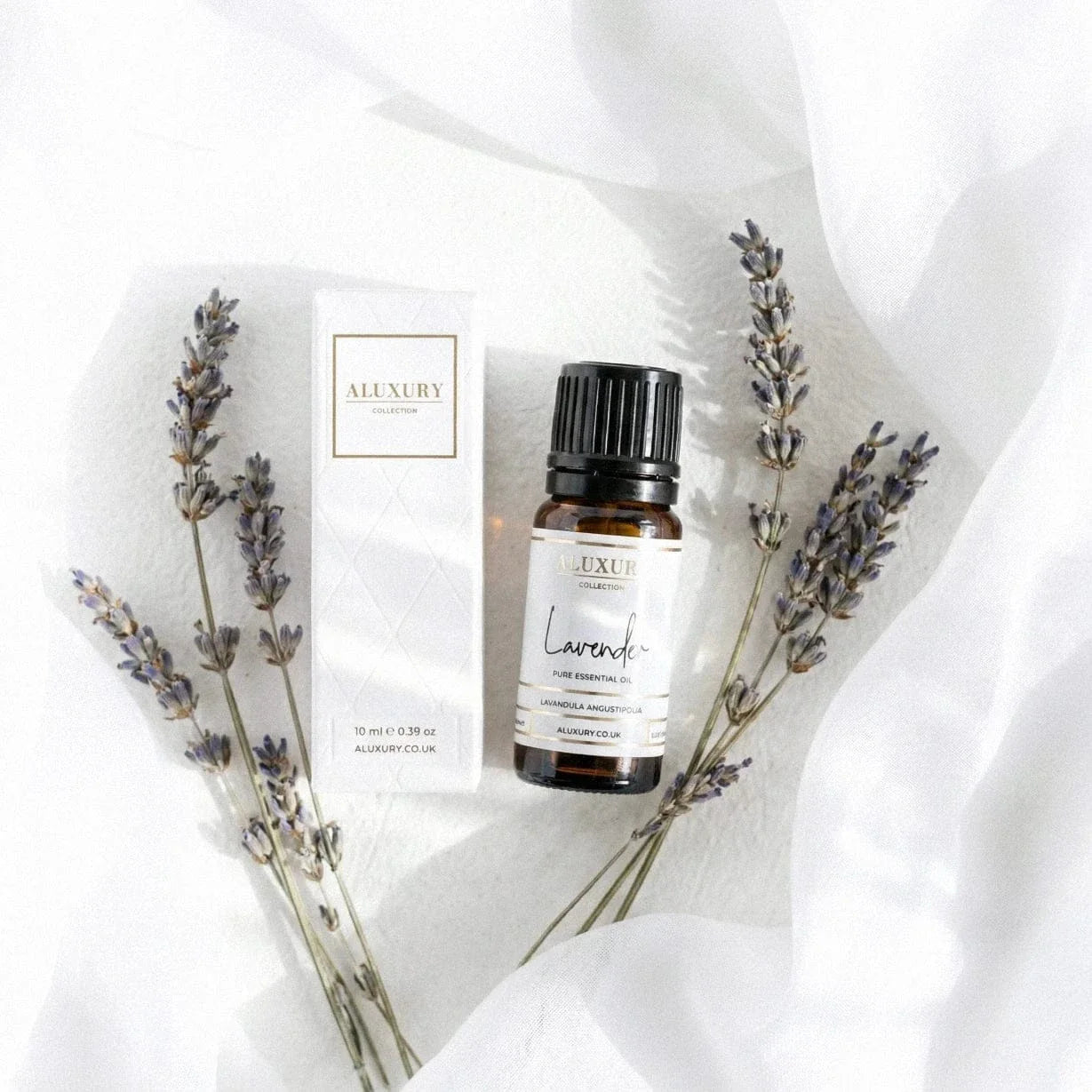
If you are wondering which oils for a waterless diffuser will give you the cleanest performance and the most pleasing scent, the following are reliable favourites. Each is light enough to nebulise smoothly while offering a distinct character and benefit.
For pre-blended options designed to atomise cleanly, our range of luxury diffuser oils is formulated with waterless diffusers in mind, so you can enjoy expertly balanced scents without mixing your own.
A few essential oils are naturally thick, resinous or sticky, and these are the ones to treat with care in a waterless system. The usual culprits are vetiver, myrrh, oud (agarwood), sandalwood, vanilla and patchouli, along with certain absolutes such as jasmine or rose absolute, which are extracted in a way that leaves them denser and more viscous than steam-distilled oils.
Used neat, these dense oils move slowly through the nozzle and can build up residue over time, reducing performance. The simplest fix is to pre-dilute them with our Natural Oil Diluent, a fragrance-free triacetin diluent designed specifically for waterless diffusers. It thins the oil without altering its scent, so you can enjoy sandalwood, vetiver and other resinous favourites in a waterless system without clogging. These oils also suit an ultrasonic (water-based) diffuser well, where they are dispersed in water rather than atomised neat. Clean the unit a little more frequently when running denser oils to keep performance crisp.
Because waterless diffusers deliver neat, concentrated scent, a small amount delivers plenty of fragrance. Most people find an intermittent run-time (for example, 30 seconds on and 60 seconds off) gives a rich, consistent aroma without becoming overpowering, while also conserving oil. Start on a lower intensity setting and increase gradually until the strength suits your room size.
For larger or well-ventilated spaces, a slightly higher intensity or longer "on" interval works well; for bedrooms and snugs, keep it gentle. For scent pairing, a simple formula rarely fails: combine a bright top note (citrus such as bergamot or sweet orange), a heart note (a floral or herb such as lavender or peppermint) and a grounding base note (a wood or resin such as cedarwood or frankincense). This layering creates a rounded, long-lasting fragrance rather than a single flat note.
Finally, run a short cleaning cycle with a little alcohol periodically (particularly when switching between very different scents) to keep the nozzle clear and your aromas true.
Almost any pure essential oil will work, but viscosity is the deciding factor. Light, free-flowing oils such as citruses, florals and herbs atomise effortlessly, while thick, resinous oils like vetiver and myrrh need to be used sparingly or blended with a thinner oil to avoid clogging.
No. Waterless diffusers are designed to use neat, undiluted essential oil, with no water or carrier added. This is exactly why they produce such a pure, potent scent, and why choosing genuinely pure oils rather than pre-diluted blends matters.
Far less than you might expect. Because the scent is concentrated and most units run intermittently, a small amount of oil lasts a surprisingly long time. Using a timed on-off cycle and a moderate intensity setting will stretch your oils further still.
Lavender is the classic choice, prized for its calming, restful qualities. Cedarwood and frankincense also work beautifully in the evening, either alone or layered with lavender for a deeper, more grounding blend. Sandalwood is a wonderful evening scent too, though because it is naturally thicker we recommend pre-diluting it with our Natural Oil Diluent before using in a waterless diffuser.
Favour thinner oils for everyday use, avoid running dense resinous oils neat, and clean the nozzle periodically with a little alcohol, especially when changing scents. This simple routine keeps the atomiser clear and your fragrance crisp.
Are Essential Oils Safe for Pets? Cats & Dogs
Read moreabout Are Essential Oils Safe for Pets? Cats & Dogs
Can You Use Any Oil in a Waterless Diffuser? A UK Guide
Read moreabout Can You Use Any Oil in a Waterless Diffuser? A UK Guide
Saffron in Aromatherapy: Benefits & Uses
Share: